Setting Up Utilities in San Jose, CA: A 2026 Guide to Providers and Bills
Setting up utilities in San Jose, CA means juggling PG&E, three water companies, and tax-bill charges for sewer and garbage. See what each home type costs.
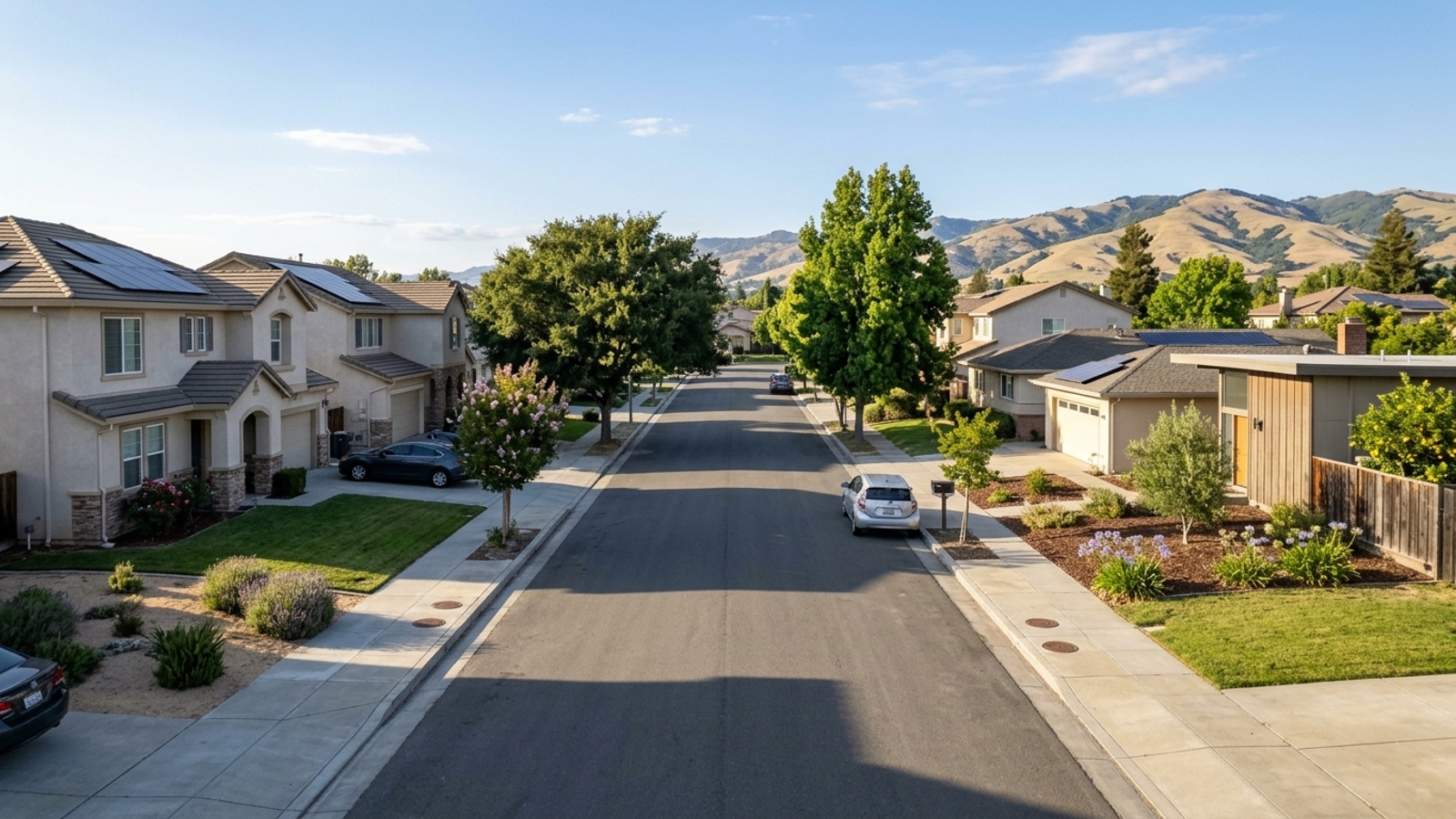
The median home price in San Jose, CA, is currently around $1,349,357, and budgeting for monthly costs means looking beyond the mortgage payment. Unlike cities with a single municipal utility department, San Jose splits its utility services across public agencies, investor-owned companies, and the county tax collector.
What a home costs to run comes down to its exact address and its property type. A buyer looking at single-family homes will assemble a very different set of monthly and annual bills than someone purchasing a condo. These differences determine your accurate budget before closing.
Key takeaway
Most San Jose homes get electricity and gas delivered by PG&E, with San Jose Clean Energy as the default power generator. Water comes from one of three companies depending on the address, and single-family owners pay sewer and garbage on the county property tax bill. If you want water, sewer, and garbage rolled into one predictable payment, start with condos whose HOA dues cover those utilities. Condos currently sell near list price after a significant year-over-year price drop, giving buyers room to negotiate. If you'd rather control each bill yourself, a single-family home gives you that.
Who this guide is for
You're comparing San Jose homes or about to close on one, and you want to know which utility bills the address will carry and how they're billed before you commit.
How utilities work in San Jose
Your utility setup in San Jose depends on the address and the home type before it depends on usage. A single-family buyer takes on separate water and PG&E/San Jose Clean Energy bills, plus sewer and garbage charges collected on the county property tax bill. A condo buyer at the $634,935 median often finds water, garbage, and sewer folded into HOA dues. These monthly expenses are a key part of weighing the pros and cons of living in San Jose.
The property tax bill and the HOA statement show what a home costs to run. Bills arrive in three main ways: direct provider statements, the Santa Clara County property tax bill, and HOA dues. These three statements prevent surprise expenses after closing.
Does the home have an HOA? If so, go first to the section on HOA dues for condos and townhouses and ask what the dues cover before comparing it with a house. Which water company serves the address? Check the city map described in the setup section, then read that company's profile under the water companies section.
Do you care which plan generates your electricity, or only what it costs? Read the sections on San Jose Clean Energy and PG&E delivery, and check the opt-out FAQ for switching. Is the home near the Santa Clara city line, and is the electric rate a deciding factor? Read the section on why Santa Clara electricity is cheaper before widening your search.
Water companies in San Jose
San Jose residents can't choose their water company. One of three retailers serves each address, and each has its own rates, billing cycles, and customer service portals.
Service areas are carved out geographically, so two homes a short drive apart can have entirely different water bills. Rate amounts for these providers are covered in the FAQs below.
San Jose Water
San Jose Water covers the largest share of the city. The state Public Utilities Commission, not San Jose's city council, approves its rates. The monthly bill shows a fixed service charge based on your meter size plus your usage in billing units.
You can't switch to a cheaper retailer if you live in this service area. Any rate increase the state approves applies to your bill, so ask the seller for the last 12 months of water bills to see actual costs.
San Jose Municipal Water
San Jose runs its own water utility for parts of the city, which is how two homes a short drive apart can end up with different water companies and rate schedules. Municipal Water serves areas including Alviso/North San Jose, Evergreen, Edenvale, and Coyote Valley, operating on its own city-approved rate schedule.
Boundaries don't follow neighborhood names. A listing description or a neighbor's bill can point you to the wrong company, so confirm the address on the city map.
Great Oaks Water
Great Oaks Water Company serves the southern end of the city, specifically east of Snell Road, north of the southern city limits, west of Coyote Creek, and south of Riverview Drive and Monterey Road. Great Oaks draws its supply from groundwater wells rather than imported surface water.
A different source can mean different hardness and taste. Read the company's annual Consumer Confidence Report for the address rather than relying on anyone's description.
Electricity and natural gas in San Jose
Most San Jose addresses rely on a split system for electricity: one entity generates the power, and another delivers it to the home. That arrangement means residents receive one monthly statement combining charges from two different providers. Natural gas service remains entirely under one company.
San Jose Clean Energy
New San Jose accounts are placed with the city's own power provider automatically, even though the bill still comes from PG&E. San Jose Clean Energy generates the electricity, and its charges appear as a line item on the PG&E statement. Per a January 2026 rate change, the default GreenSource generation charges were set 2.4% to 3.8% lower than PG&E's own generation rates.
One PG&E statement carries two sets of charges, which makes the bill harder to read. The rate comparison can shift when either side changes rates, so recheck it rather than assuming the city plan is always cheaper.
PG&E delivery and natural gas
PG&E owns the wires and gas lines, handles start and stop service, and bills both electricity delivery and natural gas. Its default rate plan for most residential customers is a Time-of-Use plan with peak pricing from 4 p.m. to 9 p.m. every day, meaning evening use costs more.
Delivery charges apply no matter who generates your power. Switching generation plans changes only part of the bill.
Why Santa Clara electricity is cheaper
Santa Clara residents buy power from a city-owned utility instead of PG&E. Silicon Valley Power publishes a 2026 comparison showing its average residential rate at $0.182 per kWh, roughly 57% lower than PG&E's average bundled rate. If you want the lowest residential electric rates in the area, comparing with Santa Clara addresses served by Silicon Valley Power is a useful starting point.
The lower rate applies only to addresses inside Santa Clara city limits. A San Jose home across the street from the line still gets PG&E delivery, and this page has no Santa Clara home-price data to weigh against the savings.
Utilities billed on your property tax bill or through an HOA
Some San Jose utility costs never arrive as a monthly bill. Depending on the type of home you buy, major services might be billed annually by the county or bundled into a community fee.
The property tax bill and HOA budget are where these costs appear. Property tax calculations are part of the buying process and closing costs, so the focus here is strictly on the utility line items.
Sewer service and use charge
A San Jose house gets no monthly sewer bill. The charge is collected on the property tax bill. The city's sanitary sewer service charge for a single-family residence is currently $608.00 per year, which works out to an equivalent of $50.67 per month.
Because it never shows up on a monthly statement, it's easy to leave out of a budget. Read the direct charges section of the current tax bill for the address to verify the amount.
Garbage and recycling
A smaller garbage cart lowers the charge on a San Jose house's property tax bill. The city's single-family garbage and recycling program is billed through the county, with the current 64-gallon cart rate set at $1,399.80 per year, or $116.65 per month. Apartments and condominiums with communal garbage service are billed directly by the city based on bin size rather than individual carts.
The cart size the seller chose is already built into the current bill. Ask the city how and when a cart-size change shows up on future bills.
HOA dues for condos and townhouses
Many condo and townhouse HOAs pay building-wide water, sewer, and garbage from dues, which collapses three costs into one payment. The condo market's year-over-year price drop and near-list sale prices mean buyers have room to ask questions and negotiate on a home whose dues may already cover utilities.
Dues that cover water spread every unit's usage across all owners, and the board can raise dues. Ask the HOA for the current budget, what the dues cover line by line, and any planned increases.
Utility users tax
San Jose adds a utility users tax to certain utility services like electricity, gas, and telecommunications. This percentage applies directly to the amounts billed by your providers. It applies whichever provider you use, so switching electricity plans doesn't avoid it.
House vs. condo utility costs in San Jose
A single-family house and a condo handle the exact same services in completely different ways, which means a straight price comparison isn't enough. To accurately compare properties, you need to convert annual tax-bill charges and HOA utility allocations into monthly equivalents. That gives you a true baseline alongside the market data.
A single-family home
At the $1,620,854 single-family median, the owner pays water directly and PG&E directly, while sewer and garbage sit on the tax bill. The monthly sewer equivalent and the 64-gallon garbage equivalent added to the separate water and power bills reveal the full cost. The monthly provider bills understate the true cost unless the tax-bill charges are added in.
Larger homes and yards drive water and energy use, and single-family homes sell above list, so there's little room to offset these costs in negotiation. That said, if you want control over your own water and energy use and costs, single-family homes offer that setup.
A condo with HOA-covered utilities
For the same household in a condo, water, sewer, and garbage often sit inside the dues, so only the PG&E bill arrives separately. The fair comparison is house utilities plus tax-bill charges versus condo electricity plus the utility share of dues.
You can't lower the water or garbage portion by using less, because the HOA pays one building bill. Ask the HOA what share of dues goes to utilities.
How to set up utilities when you buy in San Jose
Proper account setup ensures you have service on moving day without paying for the seller's usage. The process starts well before closing, and timing your transfers correctly prevents service gaps and billing disputes.
Confirm the water provider for the address
Use the city's service-area map and compare it with the seller's last bill. Homes on rural or hillside edges may use a private well, so ask about this in disclosures and check Santa Clara County environmental health records.
Each retailer has its own start-service process and possible deposit. Ask the retailer what it needs from you and how long setup takes.
Transfer PG&E service and review your SJCE enrollment
Schedule the PG&E start for your closing date. San Jose Clean Energy enrollment follows automatically, so you can decide whether to keep the default plan or opt out.
If the start date doesn't match closing, you can end up paying for days before you own the home, or have a gap in service. Confirm the date with PG&E.
Read the property tax bill's direct charges
Get the current Santa Clara County tax bill for the address and find the sewer and garbage line items. Budget their monthly equivalent alongside the monthly bills.
These charges are reset each fiscal year. The seller's bill shows this year's amounts, not next year's.
Ask the HOA what the dues cover
For condos and townhouses, ask for the budget and a written list of which utilities the dues include. Also ask whether units are separately metered for water or electricity.
Coverage varies building to building, even within one complex type. Don't assume one HOA's setup applies to another.
Check internet providers at the address
Look up the exact address on the FCC National Broadband Map. For condos, ask whether the HOA has a building-wide internet contract.
Availability and speeds vary block by block and building by building. Don't rely on what a neighboring home has. If you need help comparing homes in San Jose, Andy Tse can help you review property details and utility setups.
At a glance
- All homes, San Jose: median sale price $1,349,357, down 5% year over year (1,489 sales, 90 days ending 2026-09-30)
- Single family: median sale price $1,620,854, down 2.6% year over year; 17 median days on market; 101.9% sale-to-list; 48.4% sold above list; 1.8 months of supply (1,012 sales, 90 days ending 2026-09-30)
- Townhouse: median sale price $960,011, down 9.4% year over year; 24 median days on market; 101.2% sale-to-list; 49% sold above list; 2.7 months of supply (173 sales, 90 days ending 2026-09-30)
- Condo: median sale price $634,935, down 9.2% year over year; 42 median days on market; 98.6% sale-to-list; 19.7% sold above list; 3.6 months of supply (264 sales, 90 days ending 2026-09-30)
San Jose utilities FAQs
How much is water in San Jose?
San Jose Water Company's current residential rates include a fixed monthly service charge based on meter size plus usage rates. For a standard meter, usage costs $5.0355 per Ccf for the first 6 Ccf, $7.5156 per Ccf for 6 to 12 Ccf, and $14.3548 per Ccf for usage over 12 Ccf. Municipal Water and Great Oaks charge differently, with Great Oaks projecting average bi-monthly residential bills rising to $173.07 in 2026, so the exact cost depends on which company serves the address.
Is $100 a month a high water bill in San Jose?
It depends on your provider, but at current San Jose Water rates, $100 covers the fixed service charge and a modest amount of usage. Yard size and irrigation drive the biggest differences in consumption. Ask the seller for 12 months of past bills to compare their actual usage against your budget.
How do I contact San Jose Water customer service?
You can reach San Jose Water's 24-hour customer service at 408-279-7900 or by email at customer.service@sjwater.com. Customers can also manage accounts and pay bills online through the SJWaterHUB portal. Confirm that San Jose Water serves the address before setting up an account.
What is the average electric bill in San Jose?
For a typical residential customer using 500 kWh per month, PG&E reports an average bill of $208.68 per month effective January 2026. Home size and evening power use will push your specific bill higher or lower than that figure.
How much are utilities per month in San Jose?
A single-family home using 500 kWh of electricity averages around $208.68 for power, plus water charges that depend on the provider, and monthly equivalents for sewer and a 64-gallon garbage cart. That puts total basic utilities into a range of roughly $400 to $500 per month depending on water use. Condo buyers should check the HOA budget, as dues often absorb water, sewer, and garbage costs.
Where does San Jose get its electricity?
San Jose Clean Energy's default GreenSource product provides a power mix of 62% renewable energy. The remaining non-renewable carbon-free portion comes from large hydroelectric and nuclear sources, with about 7% from unspecified California grid system power. PG&E delivers this electricity over its infrastructure.
Are utilities cheaper in Santa Clara than in San Jose?
Yes. Santa Clara's Silicon Valley Power charges an average residential electric rate of $0.182 per kWh, which is roughly 57% lower than PG&E's average bundled rate. Santa Clara also sets its own water and sewer rates, currently charging a $29.78 minimum monthly water fee and $64.46 monthly for single-family sewer. This page has no Santa Clara home-price data, so overall cost of living is not compared here.
Can I opt out of San Jose Clean Energy?
Yes, San Jose Clean Energy charges no fee to opt out of its electric generation service. You can opt out at any time by calling (833) 432-2454 or visiting SanJoseCleanEnergy.org with your PG&E account information ready. Delivery stays with PG&E either way, and requests made at least five days before a meter read date are processed for that cycle.
Sources
- Redfin: Data Center
- City of San Jose: Drinking Water Customer Service
- San Jose Water: AL 629-A Approved Rates
- CPUC: Great Oaks Water Company Notice
- San Jose Clean Energy: Key Documents
- San Jose Clean Energy: GreenSource
- San Jose Clean Energy: Terms and Conditions
- Silicon Valley Power: Rates and Fees
- City of San Jose: Sanitary Sewer Service Charges
- City of San Jose: Garbage and Recycling Rates
- City of San Jose: Pay My Utility Bill
- PG&E: Electric Rate Advisory
- San Jose Water: Contact Us
- City of Santa Clara: Water Rates