Moving to San Jose, CA, in 2026: Where You Can Negotiate and Where You'll Bid
Moving to San Jose, CA, in 2026 means choosing your property type carefully. Condos sell below asking, but houses and townhouses still draw competing bids.
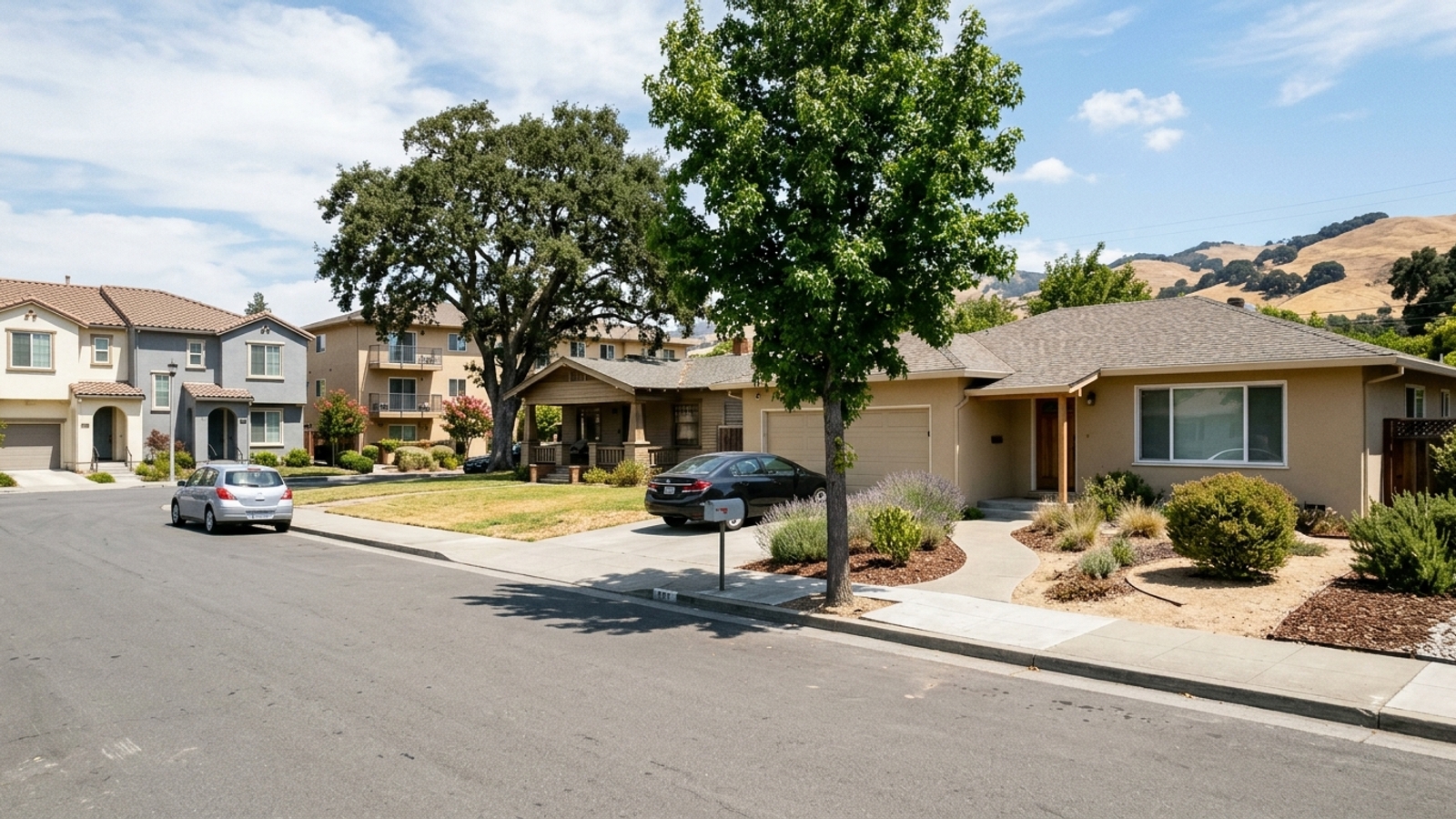
Santa Clara County anchors the southern end of the Bay Area, and San Jose, CA, is its largest city by population. The local climate brings roughly 13.5 to 24 inches of rain annually, with mid-summer highs typically hitting 80 to 85 degrees and lows settling between 55 and 60 degrees.
For a newcomer, the local housing market is split into distinct tracks based on what you want to buy. The home type you target dictates whether you'll negotiate on price or bid against multiple buyers.
Key Takeaway
If you are moving to San Jose and want room to negotiate, start with condos, where prices fell 9.2% over the past year and most units sold below asking. If you need a detached house or a townhouse, plan to bid. Both property types still regularly sell over list price, even in segments where prices dipped.
Who This Guide Is For
You are relocating to San Jose and deciding which type of home to target, and whether to buy as soon as you arrive or rent first.
What to Expect When Moving to San Jose
The citywide housing market recently saw a 5% year-over-year drop in median sale price, with homes spending a median of 22 days on the market. Those overall figures blend three different property types that behave in completely different ways.
The specific home type you choose decides whether you'll have time to weigh options or need to act the moment something hits the market. The sections below break down those differences, and the at-a-glance list at the bottom of this page has the complete market figures.
How to Narrow Your Search Before You Move
Before picking a specific area, settle on a timeline and a property type. Do you need a detached house with your own lot, or would shared walls work for the next few years? If shared walls fit your plans, the condo and townhouse markets offer very different levels of competition.
Next, consider whether you can tour and write an offer within days of a listing going live. If you already know where you'll work and how you'll commute, buying a competitive property immediately becomes easier. If you don't know your daily route yet, the local transit options and the rent-or-buy breakdown will help you decide.
Think about how long you expect to stay in the city. If it's only a few years, weigh the slower condo resale market against the standard costs of renting. Andy Tse's team at Intero can set up listing alerts by home type for out-of-town buyers to help you watch the market before you arrive.
San Jose Home Prices by Property Type
San Jose's housing inventory splits cleanly into three categories, and each one requires a different buying strategy. Overall city numbers won't prepare you for the reality of making an offer on a specific property.
The trade-offs come down to space, price, and competition. The profiles below are ordered from the most competitive property type to the most negotiable, showing exactly what buyers face today.
Single-Family Homes
Detached houses remain a bidding market in San Jose. Nearly half of San Jose houses sold for more than the asking price in the latest quarter.
They sell in a median of 17 days. An out-of-town buyer needs financing ready and a way to tour quickly, whether that means a scouting trip or a trusted proxy. Prices barely moved year over year, so waiting for a drop is not a strategy the data supports.
A 17-day median leaves little time to fly in, tour, and decide. Expect to offer over list with a short contingency period, which is hard to do well from another state.
Townhouses
Townhouse prices dropped slightly more than condo prices over the past year, yet about half of townhouses still sold above asking. They represent the middle option on price and space between a condo and a house.
Don't read the recent price decline as a discount you can count on. Budget for the median price rather than expecting a reduction off it, because the competition remains steady. Most townhouses also carry HOA dues, so ask the association for current dues, the reserve study, and any planned special assessments before you offer.
Condos
The condo market is where a newcomer has time and room to negotiate. The typical San Jose condo sold for less than its asking price last quarter, while the typical house sold for more.
Condos sit on the market longer and usually close below asking. You can make an offer under list, request repairs or credits, and take time to learn the city. With 3.6 months of supply, you'll have more choice and less pressure to waive contingencies.
The slow pace that helps you buy will slow you down when you sell, which matters if you may relocate again in a few years. HOA dues and special assessments vary widely by building, and not every complex is FHA-approved, so check the HUD FHA condo search and ask the HOA for dues, reserves, and pending assessments.
Should You Rent or Buy When You First Move?
The choice to rent or buy comes down to your commute and how well you know the area. Renting first fits movers who don't yet know their office location or which home type suits them best. You can check the HUD fair market rent for the San Jose metro area to set a baseline budget for a temporary lease while you explore the city.
Buying on arrival makes sense for buyers with a known commute and financing ready, especially in the condo segment, where the market gives you time to negotiate and review disclosures carefully.
A short stay makes the transaction costs of buying harder to recover. Review the standard closing costs and financing options before committing to a purchase right off the plane.
Cost of Living in San Jose
Housing is the largest single expense for anyone relocating to the Bay Area. The gap between home types means your monthly budget will look completely different depending on what you buy.
Beyond the purchase price, new residents should account for local property taxes and utility rates. The sections below outline the main costs a mover should budget for.
Housing Costs: A Down-Payment Example
Putting 20% down on a typical San Jose house takes about $324,171, which is more than half what a typical San Jose condo sells for. For illustration only, a down payment at that same percentage on a median townhouse is roughly $192,002, while the equivalent on a median condo comes to about $126,987.
The cash needed for a typical detached house sets a high barrier to entry. That percentage is an illustration, not a requirement, and loan options vary widely based on your financial profile. The down payment is only the entry cost. Closing costs, property tax, insurance, and any HOA dues come on top, and a house bought over list needs more cash still if it appraises below the price.
Property Taxes
Under Prop 13, a California home's assessed value can rise by no more than 2% a year until it sells, so your neighbor's tax bill may be far below yours. A purchase resets the assessed value to the price you paid.
Property taxes consist of a 1% general levy plus voter-approved debt and any applicable special assessments. As a newcomer, you'll pay tax on today's price, not the seller's old assessment, so the seller's tax bill tells you nothing useful about your future payments. A supplemental tax bill usually arrives after closing to cover the reassessment, and it surprises many new owners. Some newer developments also carry special assessments, so ask for the tax bill and any Mello-Roos disclosure before you offer.
Utilities and Everyday Costs
San Jose residents are enrolled by default in the city's own electricity program, San Jose Clean Energy, with PG&E still delivering the power. The basic residential generation rate is currently $0.13565 per kWh.
Everyday costs run higher in Santa Clara County than in most of the country. You can check the local living wage estimates to understand how everyday expenses align with local salaries. Bay Area electricity rates are high, and older homes without insulation or efficient cooling can cost far more to run. Ask the seller or landlord for the last 12 months of utility bills to understand the true monthly cost.
Getting Around San Jose
Most commuters rely on the local transit networks to travel through the Bay Area. Caltrain operates out of Diridon Station, providing a direct rail connection up the peninsula. The Santa Clara Valley Transportation Authority, known as VTA, runs light rail and bus routes throughout the city and connects to the broader regional systems.
BART serves the city at the Berryessa/North San Jose station, connecting to the Green Line toward Daly City and the Orange Line toward Richmond. The station sits within a transit center that links directly to VTA bus routes.
San Jose Mineta International Airport is located close to downtown, making air travel accessible without a long drive to San Francisco or Oakland. Settle your daily commute before choosing a home type and area, because proximity to these transit hubs directly affects your schedule every day.
Schools, Safety and Neighborhoods
San Jose is served by many separate school districts, so don't assume a home is zoned to a specific school based on a map. Always confirm the assignment directly with the Santa Clara County Office of Education using the specific property address.
The San Jose Police Department publishes official crime data and an incident map for the city. Review this data for any address you're considering, and read the method notes to understand how incidents are counted in different areas. You can review the local neighborhood profiles and the pros and cons of the city as you narrow down your target locations. Andy Tse's team can share recent sales by home type for any area on your shortlist.
At a Glance
- All homes: median sale price $1,349,357, down 5% year over year (90 days ending 2026-09-30, 1,489 sales)
- All homes: median 22 days on market, 101.1% sale-to-list, 42.6% sold above list (90 days ending 2026-09-30)
- All homes: median $836 per sq ft, 2.3 months of supply, 1,140 homes for sale (90 days ending 2026-09-30)
- Single-family: median sale price $1,620,854, down 2.6% year over year, median 17 days on market (90 days ending 2026-09-30, 1,012 sales)
- Single-family: 101.9% sale-to-list, 48.4% sold above list, 1.8 months of supply, $956 per sq ft, 597 for sale (90 days ending 2026-09-30)
- Townhouse: median sale price $960,011, down 9.4% year over year, median 24 days on market (90 days ending 2026-09-30, 173 sales)
- Townhouse: 101.2% sale-to-list, 49% sold above list, 2.7 months of supply, $672 per sq ft, 153 for sale (90 days ending 2026-09-30)
- Condo: median sale price $634,935, down 9.2% year over year, median 42 days on market (90 days ending 2026-09-30, 264 sales)
- Condo: 98.6% sale-to-list, 19.7% sold above list, 3.6 months of supply, $586 per sq ft, 308 for sale (90 days ending 2026-09-30)
Moving to San Jose FAQs
Is San Jose a Good City to Live In?
San Jose suits movers who can absorb high housing costs and want access to Silicon Valley jobs and transit. The all-homes market recently had 2.3 months of supply, which means it's a tight market where buyers still have options in some segments. You can read the pros and cons page to see how the city aligns with your needs.
What Is a Livable Salary in San Jose?
For 2026, the MIT Living Wage Calculator estimates a living wage of $38.00 per hour for a single adult with no children in Santa Clara County. This assumes a person is working full-time, compared to a state minimum wage of $16.90 per hour.
What Are the Downsides of Living in San Jose?
The primary downside is the high cost of entry, with an all-homes median of $836 per square foot. Buyers also face strong competition for detached houses and high local electricity rates. You can review the pros and cons page for a complete list of local trade-offs.
Where Can I Check Crime Data for San Jose Neighborhoods?
The San Jose Police Department's incident map and crime data are linked in the Schools, safety and neighborhoods section above. Look up specific addresses to see recent reports, since incident counts depend on reporting methods.
How Far Is San Francisco from San Jose?
San Francisco is about a 50-mile drive up the peninsula, and you can also take Caltrain from San Jose Diridon to San Francisco 4th and King. Peak-hour driving times vary widely, so you should test your own commute during normal travel hours.
What County Is San Jose In?
San Jose is located in Santa Clara County. The city has a current population estimate of 989,814 residents.
Is San Jose Airport International?
Yes, San Jose Mineta International Airport offers international flights. As of mid-2026, nonstop international service includes flights to Guadalajara, León/Guanajuato, and Morelia, Mexico, plus service to Tokyo Narita, Japan.
Sources
- Redfin: Data Center
- MIT Living Wage Calculator Santa Clara County, CA
- CDTFA sales and use tax rate City of San Jose 2026
- Santa Clara County Department of Tax and Collections property tax rate 1% base plus voter-approved debt
- California Proposition 13 2% annual assessed value cap BOE
- San Jose Clean Energy default electricity provider and rates
- VTA BART Berryessa/North San Jose station service
- San Jose Mineta International Airport nonstop international destinations
- Santa Clara County Office of Education school district lookup San Jose
- US Census Bureau QuickFacts San Jose city California population estimate
- HUD FHA approved condominium search
- NOAA San Jose climate normals annual rainfall temperatures