Retirement Communities in San Jose, CA: Costs, Types, and When to Downsize
Find retirement communities in San Jose, CA, from 55+ homes to CCRCs. See how selling a home for a median $1.6M can fund your next move in Silicon Valley.
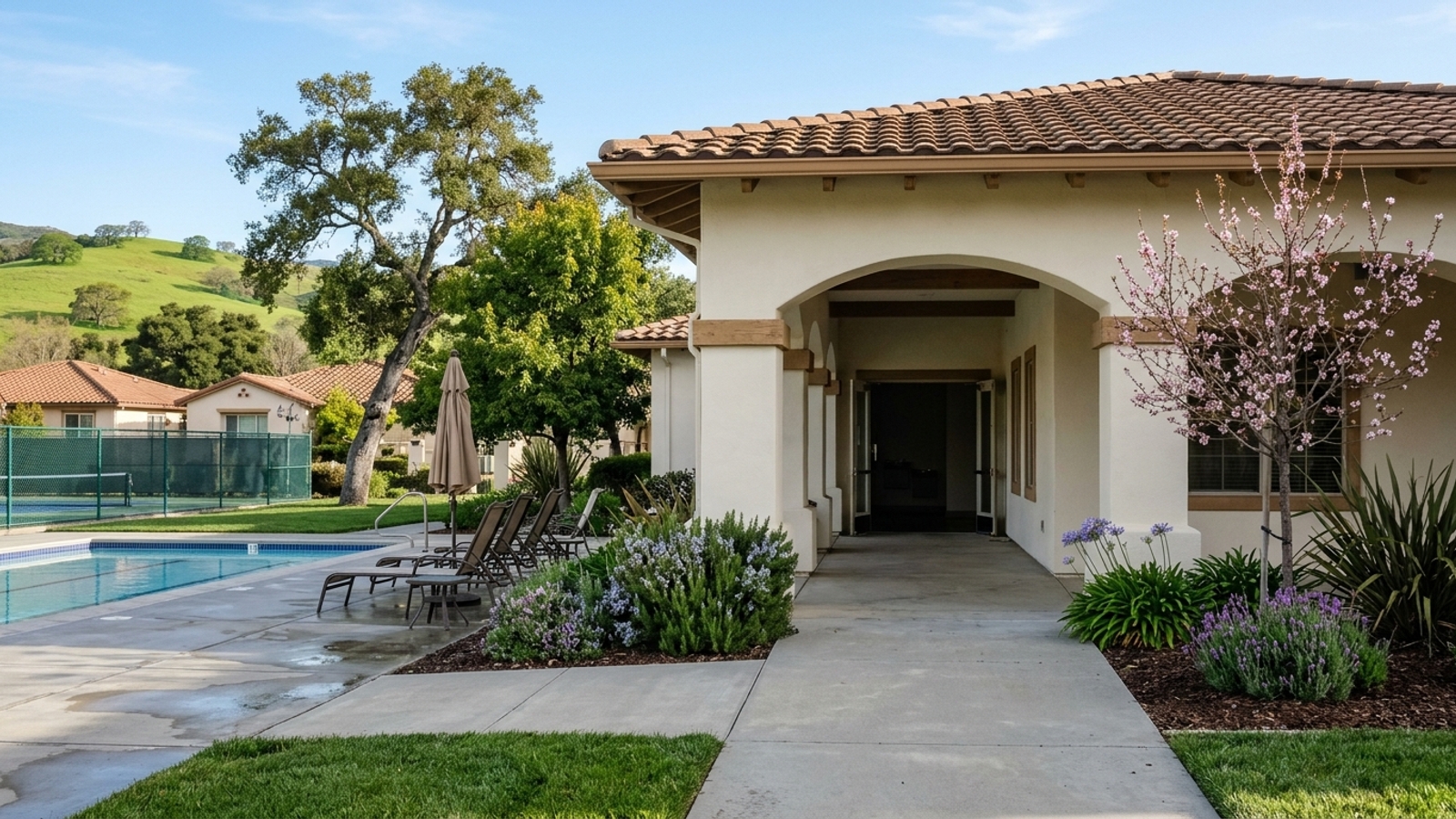
San Jose homeowners nearing retirement face a real decision about what comes next. The choice usually comes down to buying something smaller or moving into a community that provides daily services.
Your current house holds the equity that makes either path possible. Single-family homes are selling in 17 median days while condos sit for 42, so knowing which segment you're buying into will help you plan the move in the right order.
Key Takeaway
If you're leaving a San Jose house and don't need daily care yet, a condo or 55+ home is usually the strongest first move. Houses are still selling quickly while condos are closing at a median 98.6% of list price, meaning you can sell high and negotiate on the purchase. If you want care on one campus as your needs change, a continuing care community is the alternative, and the equity a downsize frees up is what pays for it.
Who This Guide Is For
You own a home in San Jose and are deciding whether to sell and buy something smaller, move into a 55+ community, or pay for a retirement community with services, and how the sale would cover it.
Why Downsizing in San Jose Favors Condo Buyers Right Now
Single-family homes are selling in the city's tightest conditions: a median of 17 days on the market and 1.8 months of supply, with 48.4% of houses selling above list price. You can likely sell your house on your terms and walk away with cash in hand.
Condos are a different story. They sit for a median of 42 days and carry 3.6 months of supply, with only 19.7% selling above list. That gives you room to ask a condo seller for a better price, repair credits, or a longer closing timeline.
Downsizing to a condo or 55+ home first can free roughly $985,919 of median-to-median equity. That reserve can later fund a continuing care contract if your needs change. The order of steps matters more than which facility brochure you pick, even though many facility pages skip the home sale that pays for everything. For the broader picture, review our market trends and outlook.
How to Narrow Your Retirement Options in San Jose
Start by asking whether you need help with daily care now, or expect to within a few years. If yes, go to the section on renting in independent living, assisted living, or a CCRC, and read how to choose a retirement community. If no, start with owning a home in a 55+ community or condo, and weigh the condo or townhouse choice. If you are still deciding whether to stay local, reviewing the pros and cons of living in San Jose is a helpful step.
Next, consider whether you can manage stairs for the long term. If not, the condo side of the market matters more than the townhouse price trend. Check whether your current property tax bill is far below what a new buyer would pay, too. Read about keeping your property tax base with Prop 19 before you compare monthly costs.
Finally, ask whether you need the money from your house sale to buy the next place. The section on selling your San Jose house and buying your next one covers the order of steps.
What Are the Types of Retirement Communities in San Jose?
The main choice is whether to keep owning a home with no services or pay for services and give up ownership. Owning keeps your equity working and preserves your property tax benefits. Renting or buying into a care contract turns that equity into monthly fees.
Both paths offer different levels of independence and support, and your health alongside your financial goals will dictate which structure makes sense.
Owning a Home in a 55+ Community or Condo
Owning keeps you eligible for the Prop 19 tax transfer and lets you build equity. You can choose an age-restricted community that qualifies under federal housing-for-older-persons rules. San Jose has one inside city limits: The Villages Golf and Country Club, a gated community exclusively for adults 55 and over with its own golf course.
Senior mobile home parks are another option, with land rent governed by the city's mobile home ordinance. San Jose regulates mobile home park space rents, limiting annual increases based on the consumer price index. Or you can look at an ordinary condo with single-level living, which carries no age rule at all.
With 308 condos recently listed, you have wide choices and can hold out for elevator access or a ground-floor unit. Ask the HOA for current dues, the latest reserve study, and any planned special assessments. The trade-off is that no care comes with the home. If your needs change, you move again, and an age restriction also shrinks the pool of buyers when you resell. Ask the community or listing agent how long recent resales in an age-restricted community took to close. To compare layouts, read about condo and townhome types.
Renting in Independent Living, Assisted Living, or a CCRC
Here you pay monthly for services instead of owning. Independent living rentals provide meals and housekeeping. Valley Village Retirement Community in neighboring Santa Clara, for example, has offered units with rents ranging from $1,575 to $2,300 a month, depending on the floor plan.
Licensed assisted living and memory care facilities, such as Oakmont of Silver Creek, pair both services on one site. Continuing care retirement communities (CCRCs) charge an entrance fee plus monthly fees, with a contract covering higher levels of care. Lincoln Glen Manor in Willow Glen operates a continuing care residence program with independent living, assisted living, memory care, and skilled nursing on one campus.
California CCRC contracts must come with a disclosure statement and give residents a window to cancel. What you give up is ownership: your equity turns into fees that don't come back. Monthly charges typically rise each year, entrance-fee refunds may be partial or shrink over time, and popular campuses keep wait lists. Ask any CCRC for its disclosure statement, the exact entrance-fee refund schedule, and its history of monthly fee increases before you go further.
Costs to Expect When Downsizing in San Jose
A seller at the single-family median of $1,620,854 who buys at the condo median of $634,935 has a gap of $985,919 before selling costs, taxes, and moving. That gap can cover a condo bought outright with no mortgage. The remaining reserve could later fund a CCRC entrance fee or several years of independent-living rent.
Using Valley Village's posted rents of $1,575 to $2,300 a month as an illustration of scale, a paid-off condo plus HOA dues might compare favorably to renting. On the tax side, the main-home capital gains exclusion has a cap. Under IRS rules, you can generally exclude up to $250,000 of gain from your taxable income, or $500,000 for certain married couples filing jointly.
Long-held San Jose homes can easily exceed that cap. Ask a tax professional whether your gain on the sale exceeds the main-home exclusion. That's not tax advice, just a question worth asking before you close. For closing costs and preparing a long-time home, review our selling costs, closing and preparing a long-time home guide. To learn about financing the next purchase, see our financing and the buying process guide.
Condo or Townhouse for Downsizing in San Jose
Both property types saw price drops recently, with townhouses down 9.4% and condos down 9.2% year over year. The difference is in the competition: 49% of townhouse units sold above list price, so the price drop doesn't translate into the same negotiating room you'll find in the condo market.
Condos recently sold at $586 per square foot, while townhouses sold at $672 per square foot. A townhouse buys you a garage and private entry, but you'll likely compete for it, and you'll probably climb stairs. If a townhouse is the direction you're leaning, confirm there's a bedroom and full bath on the entry level, or room for a stair lift.
If freeing the most equity is the priority and you don't need services yet, start with a single-level condo. If you want a garage and private entry while still downsizing, a townhouse works, but budget for competition. Read more about condo and townhome types to compare your options.
Keeping Your Property Tax Base with Prop 19
California lets owners 55 and older carry the assessed value of their current home to a replacement home anywhere in the state. Under Proposition 19, you can transfer your taxable value up to three times. If the new home costs more, an adjustment is added based on a sliding scale.
In Santa Clara County, you file the claim with the Assessor using form BOE-19-B, and claims must be filed within three years from the date the replacement residence is purchased to receive full relief. Confirm Prop 19 eligibility and filing deadlines with the Santa Clara County Assessor.
A condo bought this way may carry a lower tax bill than a new buyer's would, which changes the monthly comparison with renting services. Renters in independent living or a CCRC get no benefit from this transfer. This information is for planning purposes and is not tax advice.
Selling Your San Jose House and Buying Your Next One
Single-family houses recently closed at a median 101.9% of list price, so selling first is realistic and leaves you with cash in hand. In the slower condo segment, a seller may also be more open to a purchase that depends on your sale closing. Ask the condo seller's agent whether they'll accept that contingency.
You can sell first and negotiate a rent-back, buy first using a bridge loan, or make an offer contingent on your sale closing. Compare each route's cost with your lender. If you plan to use a reverse mortgage to buy, confirm the condo complex meets FHA approval requirements.
If you're moving into a CCRC, ask whether the entrance fee can be due after your sale closes. Closing costs, financing steps, and sale timing are covered in the guides linked in the costs section above. If you want help planning your sale timeline, reach out to discuss your property.
How to Choose a Retirement Community in San Jose
For care communities, check the facility's license and inspection reports. The California Department of Social Services operates a public search tool to view license status, capacity, and visit history for residential care facilities. Confirm that any CCRC you're considering is on the state's approved list of continuing care providers.
For owned homes, ask for the HOA documents and the age-verification policy. Ask a 55+ community whether younger co-residents or renters are allowed, whether there's a wait list, and how deposits work. Ask each care community the same questions about wait lists and deposits.
Visit any community at mealtime and on a weekday afternoon, and confirm how far you'd be from your doctors. To understand the surrounding area, explore our zip codes and areas and our neighborhoods guides. For official crime figures and how to read them, see our safety and crime data guide. We're happy to help you tour and compare these options.
At a Glance
- Single-family median sale price: $1,620,854, down 2.6% year over year (Redfin, 90 days ending 2026-09-30, 1,012 sales)
- Single-family: 17 median days on market, 101.9% sale-to-list, 48.4% sold above list, 1.8 months of supply, $956 per sq ft (90 days ending 2026-09-30)
- Condo median sale price: $634,935, down 9.2% year over year (90 days ending 2026-09-30, 264 sales)
- Condo: 42 median days on market, 98.6% sale-to-list, 19.7% sold above list, 3.6 months of supply, 308 listed, $586 per sq ft (90 days ending 2026-09-30)
- Townhouse median sale price: $960,011, down 9.4% year over year (90 days ending 2026-09-30, 173 sales)
- Townhouse: 24 median days on market, 101.2% sale-to-list, 49% sold above list, 2.7 months of supply, $672 per sq ft (90 days ending 2026-09-30)
- All homes median sale price: $1,349,357, down 5% year over year (90 days ending 2026-09-30, 1,489 sales)
San Jose Retirement Communities FAQs
Is It Cheaper to Live in a 55 and over Community in San Jose?
It depends on the homeowner association dues versus your current carrying costs. The Villages Golf and Country Club, for example, is a gated private retirement community in San Jose exclusively for adults 55 and over. Get current dues and assessments from each HOA you're considering so you can compare directly. A Prop 19 transfer can also lower the tax side of your expenses, as detailed in the property tax section above.
How Much Do You Need to Retire in San Jose?
Costs vary widely based on whether you own or rent. The UCLA Center for Health Policy Research's California Elder Index tracks county-level costs, and a related 2023 report found that a single older adult who rents in Santa Clara County needs at least $38,796 per year to meet basic needs. An owner with a paid-off mortgage will have different carrying costs than a renter. This is not financial advice.
What Is the 80/20 Rule in a 55+ Community?
Under the federal Housing for Older Persons Act, a 55 or older housing community must be intended and operated for occupancy by persons 55 or older. At least 80% of its occupied units must be occupied by at least one person who is 55 or older, and the community must comply with HUD's rules for verifying occupancy. Each community sets its own rules for the remaining 20%.
What Is the Entrance Fee for a CCRC in San Jose?
Fees depend entirely on the facility's contract structure. Lincoln Glen Manor, a nonprofit CCRC in San Jose's Willow Glen neighborhood, does not require a buy-in or long-term entrance-fee commitment. The state's Continuing Care Contracts Branch maintains lists of approved CCRCs in California. Request the disclosure statement and refund schedule from any facility you tour.
Is San Jose a Wealthy City?
Home prices reflect a high cost of living. The median sale price for all homes in the city is $1,349,357. You can read more about local property values in our market trends and outlook guide.
Is San Jose a Good Place to Retire?
That depends on your budget and lifestyle preferences. Review our cost of living guide to weigh the expenses, and check our safety and crime data guide for official statistics. Visit specific communities at different times of day and confirm the distance to your doctors before deciding.
Sources
- Redfin: Data Center
- California Board of Equalization: Proposition 19
- Santa Clara County Assessor: Senior Citizen Transfer
- GovInfo: Housing for Older Persons Act
- The Villages Golf and Country Club: Homeowners Corporation Rules
- City of San Jose: Housing Rental Rights
- California Department of Social Services: Continuing Care
- Lincoln Glen Manor
- BBB: Valley Village Retirement Community
- Paying for Senior Care: Assisted Living in San Jose, CA
- UCLA Center for Health Policy Research: Elder Index
- IRS: Publication 523
- Medicare.gov: Long-Term Care
- California DHCS: Assisted Living Waiver
- California Department of Social Services: Care Facility Search