How to Get Around San Jose, CA, and What it Means for your Home Search in 2026
Getting around San Jose, CA shapes the homes you can buy. Condos near light rail sold at 98.6% of list; single-family homes closed at 101.9% in 17 days.
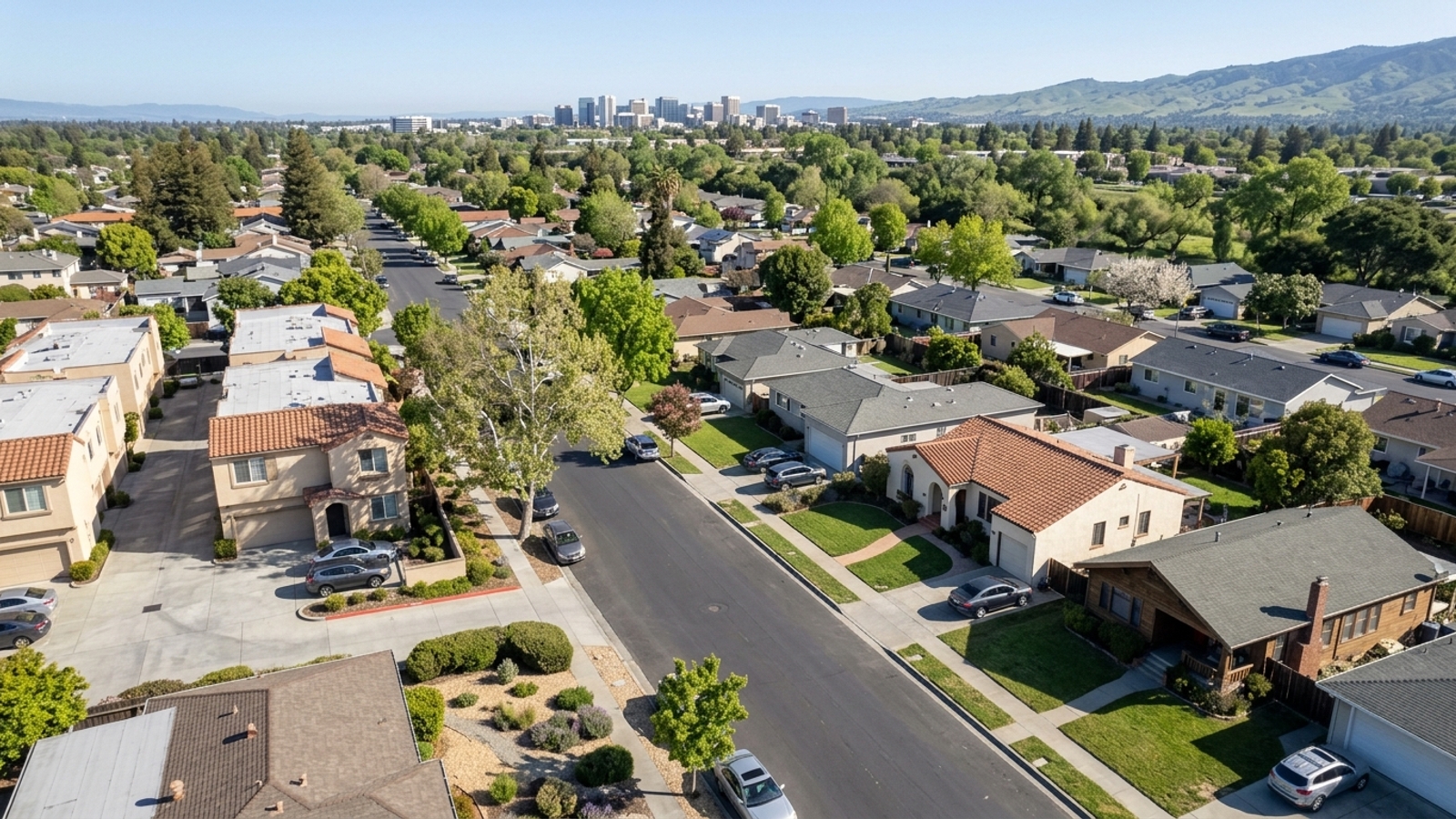
San Jose covers over 175 square miles. That scale means your daily route affects your schedule and determines which housing market you're shopping in. A home near a major transit hub delivers a fundamentally different daily life than a house deep in a suburban subdivision, and the price tags reflect that difference.
Buyers who prioritize light rail or walkable streets look at different property types, at different price points, with different levels of competition, than buyers who need immediate freeway access.
Key Takeaway
You can get around San Jose without driving every day if you live and work near VTA light rail or Caltrain. That car-light route points you to condos, which sold well below asking in the 90 days ending September 30, 2026. If your commute or errands need a car daily, plan on a townhouse or single-family home with parking, which costs more and still draws over-asking offers.
Who This Guide Is For
You're deciding where in San Jose to buy and need to know whether your daily trips can run on transit and walking or will require a car.
How Transportation Choices Shape Your Home Search
How you plan to get around San Jose decides which housing market you shop in. A car-light life built on VTA light rail, Caltrain, and walkable downtown streets points you to condos, the one segment where buyers have room to negotiate. In the 90 days ending September 30, 2026, condos sold for a median of $634,935 at 98.6% of the asking price, sitting on the market for a median of 42 days.
For the bigger picture, see Pros and Cons of Living in San Jose.
A drive-everywhere life points to single-family homes, where buyers face real competition. Single-family homes recently sold in a median of 17 days at a $1,620,854 median, closing at 101.9% of list price. The price per square foot shifts drastically too: $586 for condos versus $956 for single-family homes.
In the condo segment, you can usually offer under asking and take time to compare properties before committing. In the single-family segment, you're competing above asking and need to move fast. Shoppers targeting homes near light rail stations or downtown should check what's actively listed near their specific station. The full trend picture is in our San Jose housing market guide.
Home Prices by Property Type at a Glance
These figures reflect San Jose MLS sales data for the 90 days ending September 30, 2026.
- Condo median sale price: $634,935, down 9.2% year over year (264 sales)
- Condo pace: 42 median days on market, 98.6% sale-to-list, 19.7% sold above list, 3.6 months of supply
- Townhouse median sale price: $960,011, down 9.4% year over year (173 sales)
- Townhouse pace: 24 median days on market, 101.2% sale-to-list, 49% sold above list, 2.7 months of supply
- Single-family median sale price: $1,620,854, down 2.6% year over year (1,012 sales)
- Single-family pace: 17 median days on market, 101.9% sale-to-list, 48.4% sold above list, 1.8 months of supply
- All homes: $1,349,357 median sale price, down 5% year over year, 22 median days on market, 1,489 sales
- Median price per square foot: condo $586, townhouse $672, single-family $956
Public Transit, Walking, and Biking Options
The car-light side of San Jose runs on local buses, light rail, and commuter trains. It's also the side of the city where condo pricing applies, giving buyers a lower entry point in exchange for shared walls and a smaller footprint.
Relying on transit means mapping your daily routine to fixed schedules and specific corridors. Before targeting these neighborhoods, confirm your workplace sits near a stop on your actual line.
VTA Light Rail and Local Buses
The Santa Clara Valley Transportation Authority (VTA) operates three light rail lines, Blue, Green, and Orange, running on surface streets through downtown San Jose along First and Second Streets. The Green Line runs 20 hours per weekday with 15-minute intervals for most of the day. VTA also runs rapid bus routes, including the Rapid 500, which connects Diridon Station to Berryessa BART every 10 minutes on weekdays from 5:00 a.m. to 2:00 a.m.
The Rapid 522 bus runs weekdays from 5:30 a.m. to 11:00 p.m. at 20-minute frequencies. The local Route 22 runs every 15 minutes. For riders who can't use fixed-route services due to a disability, VTA ACCESS paratransit offers a shared-ride service based on ADA eligibility criteria. Run your exact trip through VTA's trip planner at your actual commute hour before you shortlist homes near a station.
Light rail and frequent buses follow a few specific corridors. If your job or regular errands sit off those lines, trips slow down and involve transfers. A home near a station only helps if the station is on your route.
Caltrain and BART Regional Connections
San Jose Diridon station is the main hub for Peninsula and San Francisco commutes via Caltrain. For East Bay trips, BART currently reaches San Jose at the Berryessa station in the northern part of the city. Homes near Diridon or a future BART station are bets on regional access.
VTA's BART Silicon Valley Phase II project is a six-mile, four-station extension designed to bring trains through downtown San Jose to Santa Clara. As of a 2023 schedule update, passenger service for this extension is anticipated in 2036. Check VTA's published projected opening date before paying a premium for a home near a future BART station.
Until that extension opens, getting from downtown to BART requires a transfer. And Caltrain only helps if your destination is near a Peninsula or San Francisco station.
Walking in the Downtown Area
Downtown San Jose is the one area where daily errands, San Jose State University, the SAP Center, San Pedro Square, and Diridon station are all within walking range of each other. Condo buyers here trade square footage and private yards for the ability to walk to dinner or a hockey game. For the specific blocks you'd walk at night, use San Jose Police Department crime data rather than relying on general impressions.
Walkability drops off quickly outside the downtown core. Much of the city was built around the car, so a short-looking distance on a map can mean wide arterials and long blocks on foot.
Bicycle Routes and Commuting
The flat terrain of the valley floor makes biking a practical option for short trips, and bikes pair well with both light rail and Caltrain, since both systems allow bicycles on board. If you plan to ride daily, ask the HOA for current dues and whether there's secure bike storage before buying a condo.
The bike network is uneven across the city. Protected lanes in some areas give way to busy arterials in others. Ride your actual route before counting on a bike commute.
Driving and Parking in the City
Most San Jose residents rely on a car for their daily commute, school drop-offs, and grocery runs. The average San Jose commuter spends 28.7 minutes getting to work each way, according to recent Census Bureau data.
This car-dependent reality points buyers toward townhouses and single-family homes. At 28.7 minutes each way, that daily drive time adds up, and the townhouse segment sits well above condo pricing despite its own competitive offer environment.
Major Freeways and Commute Times
Commuters in San Jose rely on US-101, I-280, I-880, SR-87, SR-85, and I-680. Traffic congestion slows all of them down, particularly during the afternoon rush. Metropolitan Transportation Commission data shows the afternoon drive on southbound US-101 from Sunnyvale to San Jose ranked as the third most congested freeway segment in the Bay Area.
Being near the right on-ramp can matter more for your schedule than saving a few miles of physical distance. Drive the commute at your actual peak hour before making an offer on a car-dependent home. A trip that takes 20 minutes at noon can take far longer at 8:00 a.m.
Parking at Home and in Public Garages
Driving into downtown San Jose means paying for parking. The city operates seven public downtown garages with over 6,000 spaces. Four of those garages offer 90 minutes of free parking, followed by a rate of $1 per 15 minutes, though a recent City Council proposal aims to raise hourly rates by $1 in the first year of a phased plan.
At home, condos and some townhouses may come with just one assigned parking space. Ask the HOA how many spaces convey with the unit, whether they're assigned or deeded, and what the guest parking and EV charging rules are. Our guide to condo and townhome types covers HOA basics.
A condo that fits your budget may not fit your cars. Limited assigned spaces and strict street-parking rules can push a two-car household back toward townhouses or single-family homes.
Matching Your Commute to a Property Type
If your commute runs along a VTA light rail line or ends near a Caltrain or BART station, a car-light lifestyle is possible. If you'll drive to work most days, peak-hour traffic needs to factor into your location choice. Households with more than one car need to think through parking availability, which often makes townhouses and single-family homes the starting point for a search. Frequent travelers to San Francisco or the airport should weigh the value of living near Diridon station or a transit connection.
Buyers who want to commute to San Francisco or the Peninsula by train without driving daily should start with condos within walking distance of San Jose Diridon station. Diridon is Caltrain's San Jose hub, and condos are the segment with room to negotiate, showing 3.6 months of supply in the 90 days ending September 30, 2026. If you want a light rail commute and time to compare homes before you offer, look at condos near a VTA light rail station on your actual commute line. Condos took a median 42 days to sell recently, giving you time to tour and review HOA documents before deciding.
If you want parking for two cars at home for under $1 million, start with townhouses. At that median, 49% sold above list, so expect competition despite the lower price point. If you want to drive daily and have a garage and a yard, look for single-family homes close to the freeway on-ramp you'll use most. Single-family homes sold in a median 17 days, so you should be ready to move within days of touring. Andy Tse can help you filter local listings by your specific commute route and find the right property type.
Getting Around San Jose FAQs
Is There a Train Going to San Jose?
Yes. San Jose Diridon station is a multimodal rail hub located at 65 Cahill Street. Caltrain, the Altamont Commuter Express (ACE), Capitol Corridor, and Amtrak Coast Starlight trains all connect there, while BART serves the city at the Berryessa station in north San Jose.
What's the Easiest Way to Get from San Francisco to San Jose?
Taking Caltrain from San Francisco 4th and King to San Jose Diridon takes 75 minutes on local electrified trains, with express service saving up to 25 minutes. Driving via US-101 covers about 48 miles and takes roughly 45 to 51 minutes without traffic, but actual drive times are longer during peak congestion.
How Much Is an Uber from San Francisco to San Jose?
It depends on the time of day and current demand. Rideshare pricing fluctuates constantly, so get an in-app quote for your usual travel time and compare it against Caltrain's zone-based fares to see which option makes sense for your trip.
How Do I Get from San Jose Airport to Downtown?
San Jose Mineta International Airport is located 3 miles from downtown. You can take a rideshare or use the free VTA Route 60 Airport Flyer bus, which connects the terminals to the Milpitas BART station and the Santa Clara Transit Center. To reach Diridon station, take Route 60 to the Milpitas BART station and transfer to the southbound VTA Green Line.
Is San Jose a Walkable City?
It depends on the neighborhood. Citywide, Walk Score gives San Jose a score of 51, noting it is only somewhat walkable. Downtown San Jose is walkable for daily errands, but most of the city was built around car travel.
Is San Jose Safe to Walk Around at Night?
It depends on the specific blocks you plan to walk. Use San Jose Police Department crime data to look at reported incidents by area and time, comparing like with like. Review that data for your exact route rather than relying on general impressions.
Can You Get Around San Jose Without a Car?
Yes, but it works best if you live near downtown, a light rail line, or a Caltrain station. Most residents still rely on driving, but a car-free life is possible if your home and workplace sit on the same transit corridor.
How Much Does the Bus Cost in San Jose?
The VTA adult single-ride fare is $2.50 using cash or a Clipper card. An Adult Day Pass costs $7.50. Single-ride Clipper payments include two hours of free transfers across VTA buses and light rail.
Sources
- Redfin: Data Center
- VTA: Fares
- VTA: Frequency Chart
- VTA: ACCESS Paratransit
- Caltrain: Fares and Travel Times
- VTA: Closer Look at Cost Changes for VTA's BSVII Project
- Caltrain: San Jose Diridon Station
- San Jose Mineta International Airport: Public Transit Access
- San Jose Mineta International Airport: About SJC
- Walk Score: San Jose, CA
- City of San Jose: News Release
- Metropolitan Transportation Commission: Time Spent in Congestion
- Distance Cities: San Francisco to San Jose