Utilities in Saratoga, CA: Providers, Costs, and What to Check Before Buying
Before you offer on a Saratoga, CA home, know which utilities serve that address. Wells, septic systems, and mutual water companies add costs buyers miss.
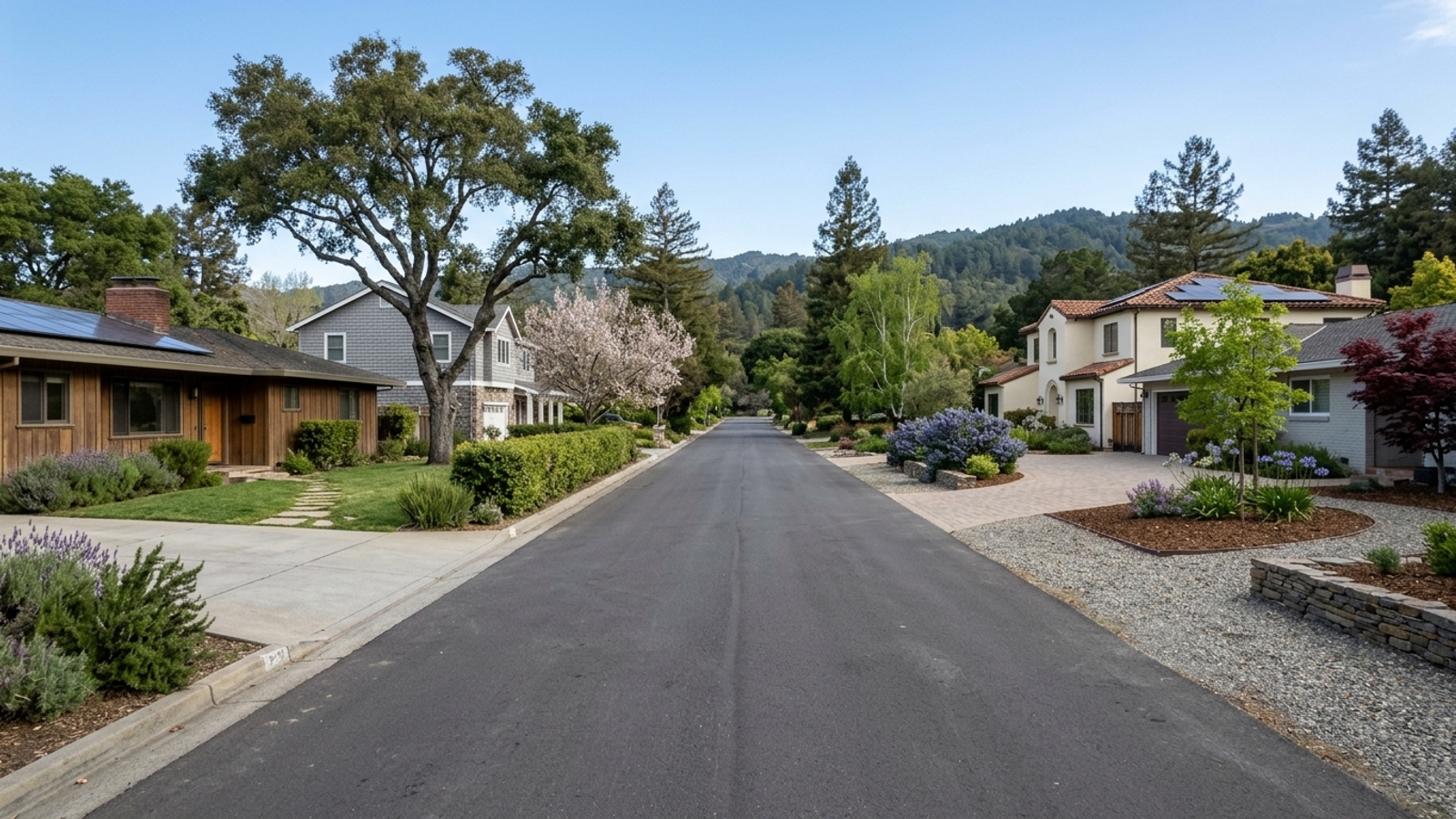
In Saratoga, the utility cost that catches buyers off guard is rarely the monthly electric bill. It comes down to which water and wastewater system a specific address relies on: a private well or a septic system versus a standard municipal connection.
Single-family supply sits at just 1.8 months. That leaves very little time during escrow to uncover a failing septic tank or a dry well, so check the utilities before you write an offer.
Key takeaway
Most Saratoga homes use three main providers:
- Electricity generated by Silicon Valley Clean Energy and delivered by PG&E
- Gas from PG&E
- Water from a water utility
The costly differences show up address by address. Some hillside homes rely on a mutual water company, a private well or a septic system, which you should confirm before offering since single-family homes are selling in a median 19 days. If you'd prefer to avoid maintaining a well or septic system, focus on listings connected to a water utility and district sewer.
Who this guide is for
You're shortlisting Saratoga homes, or about to move into one, and need to know which providers serve a specific address, what they'll cost each month, and what to verify before your offer goes in.
Citywide utilities: electricity, gas, and garbage
Power, gas and garbage collection work much the same across town, from a condo in the flats to a large estate in the hills. A few major regional providers run these services, so your bills depend on your household's usage rather than the infrastructure at the street. Moving in usually means transferring an account. What matters before you buy is how each company bills, because that shapes your carrying costs.
Electricity: Silicon Valley Clean Energy and PG&E
Saratoga is a member community of Silicon Valley Clean Energy (SVCE). Residents with existing PG&E accounts are automatically enrolled in SVCE's default GreenStart plan. GreenStart is 100% carbon-free and priced about 1% below comparable PG&E generation rates. You can opt up to GreenPrime, a 100% renewable product, for a premium of less than one cent per kWh.
SVCE generates the power, but PG&E still owns the lines, reads the meter and sends the single monthly bill. Switching generation plans changes only part of what you pay. PG&E's delivery charges apply regardless. Its default E-TOU-C plan charges more during the 4 to 9 p.m. peak hours and credits usage within your baseline allowance.
Natural gas: PG&E
PG&E supplies natural gas for heating, water heaters, cooktops and pool heaters across the city. On a large, older home with several gas appliances, winter gas bills can be the biggest utility expense of the year.
Some owners electrify to reduce gas dependence through SVCE's 2026 Home Rebates program:
- Heat pump water heater: $2,500 for replacing a gas water heater
- Heat pump HVAC system: $2,000 for replacing a gas furnace
Garbage, recycling, and yard waste
West Valley Recycles handles waste collection for single-family homes in Saratoga and bills quarterly. Single-family residents also receive:
- Three free on-call bulky item collections per calendar year
- Up to one additional recycling container at no extra charge
- Up to two organics containers
Your quarterly rate depends on the size of your landfill cart. You inherit the previous owner's cart size and service level unless you change it, so confirm what's active before the first bill arrives.
Utilities that change from one Saratoga address to the next
Electricity and gas are predictable; water and wastewater are not. Properties in the flatter areas typically connect to standard municipal systems. Homes higher in the hills often rely on localized or private infrastructure. A failed septic system, a dry well or a special assessment from a private water company can cost tens of thousands of dollars.
Water: San Jose Water or a mutual water company
Saratoga's primary water retailer is San Jose Water Company, a private utility regulated by the state. It serves the downtown hills and the Highway 85 flat areas. Santa Clara County operates under permanent water conservation rules. These ban sprinkler use between 9:00 a.m. and 6:00 p.m. and prohibit watering within 48 hours of measurable rainfall.
Some Saratoga homes get their water from a mutual water company that the homeowners themselves own. Small private entities like Saratoga Heights Mutual Water Company, Maria Lane Mutual Water Company and Mt. Eden Mutual Water Company serve limited hillside pockets. A mutual water company can levy special assessments for pipe or tank repairs. Before you commit, ask for its bylaws, its recent assessments and the share-transfer process.
Private wells on hillside lots
Homes on larger hillside lots outside water company lines often rely on private wells. Building a well takes two approvals:
- A clearance from the county's Department of Environmental Health
- A construction permit from Valley Water
Once the well exists, testing and yield are entirely the owner's responsibility.
A well means no monthly water bill. In exchange, you take on maintenance of the pump and annual testing of the water by a state-certified lab, as recommended. You also take on the risk of lost supply, since a well can lose yield in dry years. That risk transfers to you the day you close.
Sewer or septic
West Valley Sanitation District provides wastewater collection for about two-thirds of the city. Its charge appears on the property tax bill.
Some hillside homes use private septic systems regulated by the county's Department of Environmental Health. The county recommends pumping residential septic tanks every three to five years to keep solids from clogging the drainfield. Replacing a failed system on a sloped lot can involve county permits, soil testing and major excavation. That cost lands on whoever owns the home when it fails.
Septic systems and wells are concentrated in the hills, so knowing which of the best neighborhoods in Saratoga are hillside areas helps you narrow your search.
Power shutoffs in the hills
Saratoga has experienced multiple PG&E Public Safety Power Shutoffs. Events in October 2019 left tens of thousands of Santa Clara County residents without power. Hillside areas in higher fire-threat zones are more likely to be affected by these preventative outages.
The city issues its own alerts to residents, and PG&E aims to provide 48 hours of advance notice. During a safety shutoff, a home on a private well loses running water along with power. Backup power isn't free or automatic: generators and home batteries can require permits and professional installation. Ask what the seller already has and whether it was permitted.
Internet and cell coverage
Cable internet is broadly available across the city, but fiber and fixed-wireless availability vary street by street. Hillside topography can also weaken cell signals considerably. A provider's city-level coverage claim doesn't guarantee service at a specific hillside address, so verify the address itself before you rely on it for remote work.
What utilities cost for a Saratoga home
Every rate below is dated to its source. Your actual costs depend on the home's amenities and your habits. Utilities are one line in the broader budget you weigh when you compare the pros and cons of living in Saratoga.
Monthly bills for a single-family home
For a home on standard PG&E and SVCE service, the average residential non-CARE electric bill is roughly $203 per month for 500 kWh. That figure is based on early 2026 PG&E service-area averages. Garbage from West Valley Recycles adds about $58 per month for a 35-gallon landfill cart as of mid-2025, billed quarterly. Water from San Jose Water Company and gas from PG&E round out the monthly expenses. A pool heater, an electric vehicle or extensive summer irrigation will push those figures considerably higher.
Charges on the property tax bill
Some utility-type charges are billed annually on the county property tax bill rather than monthly. These include the sanitation district's sewer service charge and certain mutual water company assessments.
West Valley Sanitation District's sewer charge is $691.80 per year for a single-family residence. Properties in the district's Hillside Zone pay an additional $100 per year. Because these charges arrive with property taxes, they're easy to leave out of a budget. Pull the parcel's latest tax bill to see them itemized.
How to check a Saratoga home's utilities before you make an offer
A fast close leaves little room to schedule specialized inspectors or negotiate major repairs. Starting these checks early protects both your deposit and your budget. They run alongside the rest of the purchase process for homes for sale in Saratoga, from offer to closing. Andy Tse can request disclosures and utility records early to help you stay ahead of the timeline.
Read the disclosures for water source and sewer
California seller disclosures require the owner to state the property's water source and whether it uses a sewer or septic system. You can request this disclosure packet before you write your offer. Disclosures only reflect what the seller knows, and older septic or well records may be missing entirely. Ask the county for the permit history as well.
Ask for 12 months of utility bills
Request PG&E, water and garbage bills covering a full year to capture summer irrigation and winter heating costs. Look for baseline overages, solar credits or an EV charging pattern that might explain unusually high or low months. The seller's usage isn't yours, so treat the history as a range rather than a firm forecast.
Order a septic inspection or sewer lateral check
For septic homes, hire a licensed inspector and pull the county permit records. For sewer homes, book a camera inspection of the private sewer lateral running from the house to the street. For any septic, well or sewer-lateral repair, get written quotes from licensed contractors rather than relying on general cost figures. Book the inspector as soon as you're serious about a home, not after the seller accepts your offer.
Test the well for yield and water quality
If the property has a private well, order a flow test and a water-quality test from a state-certified lab. FHA, VA and USDA loans carry conditional water-quality requirements for well-served properties; conventional loans generally do not. Ask the seller for drilling records, past yield tests and past water-quality results. A single test won't tell the full story, because a well that tests fine in spring may yield less in late summer.
Confirm internet service at the street address
Check the exact address on the FCC National Broadband Map, then call providers directly and ask for a serviceability confirmation. Test your cell signal in person during a showing. New installs sometimes require construction or trenching on longer driveways, which can mean weeks without service and extra out-of-pocket costs.
Setting up utilities after you close
Schedule each transfer a few weeks ahead so service doesn't lapse between the seller moving out and you moving in.
Start PG&E service and confirm your SVCE plan
Set your PG&E start date to align with your closing. If you don't choose an SVCE plan, you stay on the default GreenStart plan. That may not match your preferences for solar, EV charging or renewable energy.
Transfer water and garbage service
Contact the water provider shown on the disclosures and call the garbage hauler to set up your new accounts. If you're buying a condo or townhome, one of the types of homes in Saratoga with HOA dues, ask the HOA which utilities the dues cover. Mutual water company share transfers can require more paperwork than a simple account change, so start that process during escrow, not after move-in.
How to narrow your Saratoga search by utilities
Finding the right home means matching the infrastructure to your maintenance tolerance. Match your priority to where you start:
- No well or septic to maintain: Start with listings whose disclosures show a water utility connection and district sewer (see "Water" and "Sewer or septic" above). You skip well and septic upkeep and testing in a market that leaves little inspection time.
- Running water that doesn't depend on grid power: Start with homes served by a water utility rather than a private well, especially in areas with a PG&E shutoff history (see "Power shutoffs in the hills"). A water utility's system keeps supplying the house during a shutoff.
- Room to negotiate a repair credit for a septic or well issue: Look at single-family listings that have stayed on the market longer than the typical sale. With roughly 46.9% of single-family homes selling above list, a listing that has lingered is where that kind of negotiation is possible.
As you browse, check each disclosure for sewer or septic and for the water source. Note whether the home sits in a shutoff-prone hillside area with anything critical running on power, and whether wired internet reaches the address. Andy Tse can help you find the best real estate agent in Saratoga to track down these utility details before you offer.
At a glance
- Median sale price, all homes: $3,863,160, down 2.4% year over year (90 days ending 2026-09-30)
- Median sale price, single-family homes: $4,298,286, up 0.4% year over year (90 days ending 2026-09-30)
- Homes sold: 79 all homes; 65 single-family homes (90 days ending 2026-09-30)
- Median days on market: 18 all homes; 19 single-family homes (90 days ending 2026-09-30)
- Sale-to-list ratio: 101.5% for all homes and for single-family homes (90 days ending 2026-09-30)
- Share sold above list price: 50% of all homes; 46.9% of single-family homes (90 days ending 2026-09-30)
- Months of supply: 2 for all homes; 1.8 for single-family homes (90 days ending 2026-09-30)
- Active inventory: 52 all homes; 37 single-family homes (90 days ending 2026-09-30)
- Median price per square foot: $1,489 all homes; $1,584 single-family homes (90 days ending 2026-09-30)
Saratoga, CA utilities FAQs
Who is the electricity provider in Saratoga, CA?
SVCE generates the electricity on its default GreenStart plan, and PG&E delivers it and bills for it. You can switch plans or opt out entirely through SVCE's website.
Are utilities expensive in Saratoga, CA?
California electricity rates are high: PG&E's average residential non-CARE rate was roughly 40.60 cents per kWh as of early 2026. Your costs will vary with the home's size and features, and utilities are one part of Saratoga's overall cost of living.
What county is Saratoga, CA in?
Saratoga is in Santa Clara County. The county's Department of Environmental Health issues septic permits and well construction clearances, so it is the agency to check for a hillside property's permit records.
How much does it cost to replace a septic system in Saratoga?
The cost depends on the lot. The county's Department of Environmental Health issues the repair permit, and if the lot has enough area that meets setbacks, a conventional system can be used instead of alternative treatment technology. If a system fails and surfaces raw sewage, county code requires immediate abatement, and an emergency repair permit must be obtained before repairs begin. Get written quotes from licensed septic contractors and a soil evaluation to pin down the exact cost.
What fees apply to hook a septic home up to district wastewater service?
West Valley Sanitation District charges a $1,100 annexation application fee. A separate connection fee can reach $11,000 for a new single-family house, and other lateral fees may also apply. Ask the district whether a sewer main reaches the street before assuming you can connect.
What runs up a water bill in Saratoga?
Outdoor irrigation and pools are the main drivers. There's no mandatory drought emergency as of 2026, but the permanent watering-hour rules still apply. Compare the seller's summer and winter water bills to see how much the landscaping adds.
Sources
- Redfin: Data Center
- Silicon Valley Clean Energy: Choices
- PG&E: Residential Electric Rate Plan Pricing
- PG&E: Electric Rate Advisory
- Silicon Valley Clean Energy: Home Rebates
- Patch: Saratoga Power Outage Latest
- Valley Water: Find My Retailer
- Valley Water: Board of Directors Declares Water Conservation a Way of Life
- West Valley Sanitation District: District Service Area
- West Valley Sanitation District: What's That on Your Property Tax Bill?
- West Valley Sanitation District: Doing Work on Your Property
- Santa Clara County: Onsite Wastewater Treatment System (OWTS)
- Santa Clara County: Apply for New Well Construction or Water System Clearance
- West Valley Recycles: Saratoga SFD Rate Postcard